
Appspace on Microsoft Teams Rooms: Signage Best Practices
Introduction
With Appspace Signage’s native integration with Microsoft Teams Rooms (MTRs), you can utilize idle meeting room screens for digital signage content. This helps engage employees wherever they are and maximizes the use of your existing display real estate.
Important: The Microsoft Teams Rooms integration is currently in limited release through Microsoft’s TAP (Technology Adoption Program). For the latest information on availability and rollout, refer to Microsoft’s roadmap.
Key Benefits
- Maximized Real Estate: Leverage existing MTR screens as powerful digital signage communication tools when the room is idle.
- Employee Engagement: Ensure content is displayed to engage employees wherever meeting rooms are deployed.
- Administrative Control: Empower publishers and administrators to maintain performance and reliable content delivery.
What This Guide Covers
This guide will cover the following topics:
- How to optimize content and manage bandwidth for MTR devices
- How caching and low bandwidth mode work on MTR devices
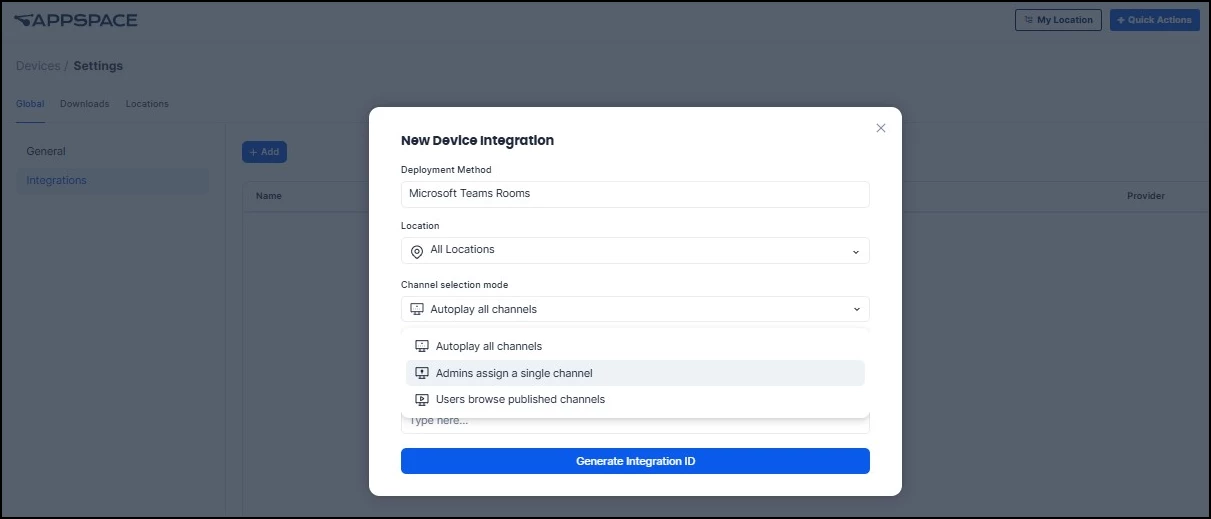
- How to assign a content channel during configuration
- How to use multi-zone playlists and advanced channels
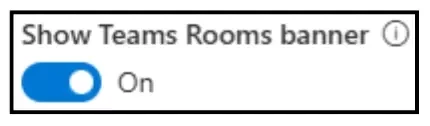
- How to handle the MTR banner (room name/calendar preview)
Prerequisites
In order to allow for the configuration of Microsoft Teams Rooms and these best practices, you need to meet the following requirements:
- You must have a Appspace Publisher or Administrator role.
- Microsoft Teams Rooms devices are registered and enabled for digital signage integration.
- You must have access to the Microsoft digital signage tenant management page (for banner configuration).
Understanding MTR Device Limitations
Before diving into configuration, it's important to understand a key constraint: MTR devices are designed for video conferencing, not dedicated digital signage. Appspace adds signage as an additional capability that runs when the device is idle. This means:
- Signage content only displays when the room is not in a meeting. Complex scheduling or heavy content loads may never fully play if the room is frequently in use.
- MTR hardware is not built to handle the same content loads as a dedicated signage player. Lean playlists with smaller file sizes will always perform more reliably.
- Simplicity is key — focus on high-impact, lightweight content rather than trying to replicate a full signage deployment.

Low Bandwidth Mode on MTR Devices
Low Bandwidth Mode is enabled by default on all PWA devices, including MTR. This feature prevents large video files from streaming automatically without an administrator making a deliberate choice to allow it.
MTR devices (and Zoom Rooms) now correctly respect Low Bandwidth Mode rules. Here's how it works in practice:
- Videos under 300 MB play normally, even with Low Bandwidth Mode enabled. These videos are cached locally, so they are not streaming and the low bandwidth rules do not apply to them.
- Videos at or over 300 MB are always streamed. With Low Bandwidth Mode on, these videos will not play — the device will show a blurred thumbnail with a notice instead. This is by design: it signals to the administrator that the video is too large to cache and would consume significant bandwidth to stream.
- Disabling Low Bandwidth Mode allows videos over 300 MB to play, but they will always stream from the network and never be cached.
To adjust Low Bandwidth Mode, go to the device settings in the Appspace Admin Console. You can enable or disable it per device.
Note: PWA devices running Windows or macOS do not currently support Low Bandwidth Mode. However, MTR and Zoom Rooms devices (which run PWA) do correctly enforce it.
Assigning a Channel During Configuration
Microsoft has a built-in failsafe that causes the Appspace App to immediately close if there is no channel or content assigned to the device. If content has not been assigned, the device will show a "please publish content" message or a black screen while idle. When this happens, the MTR device will launch the Appspace App for a split second and then won't relaunch it until the MTR itself is rebooted.
To prevent this:
- Single Channel: When generating the MTR integration ID, select "Admins assign a single channel" under the Channel Selection Mode option. This ensures the MTR defaults to a known working playlist.
- One or More Channels: If you want the devices to autoplay one or more channels, ensure at least one channel with content is published to the root location of Appspace so that newly configured MTRs inherit that assignment.
Using Multi-Zone Playlists and Advanced Channels
MTR devices now officially support multi-zone playlists and advanced channels, allowing you to display multiple content zones on a single screen — for example, a clock, weather widget, and a content feed side by side.
However, because MTR devices are not dedicated signage hardware and content only displays when the room is idle, keep the following in mind:
- Keep it simple. Two or three zones with lightweight content is the sweet spot. A clock, a weather widget, and a content feed is a common and effective layout.
- Avoid complex scheduling. Since signage only appears when the device is idle, the device may never reach a scheduled content change if the room is in frequent use. Design your content assuming it could display for seconds or hours.
- Skip interactive elements. MTR devices do not support touch interactivity for signage content.
Designing Content Around the MTR Banner
The MTR device automatically displays a banner (including the room name and calendar preview) that takes up the top 15% of the screen height. You have two options:
- Keeping the Banner: Avoid placing critical text or images in the top 15% of the screen when designing content.
- Disabling the Banner: The banner can be disabled from your Microsoft digital signage tenant management page.
To learn more about this process in Microsoft, see Digital signage with Teams Rooms — Microsoft Learn.